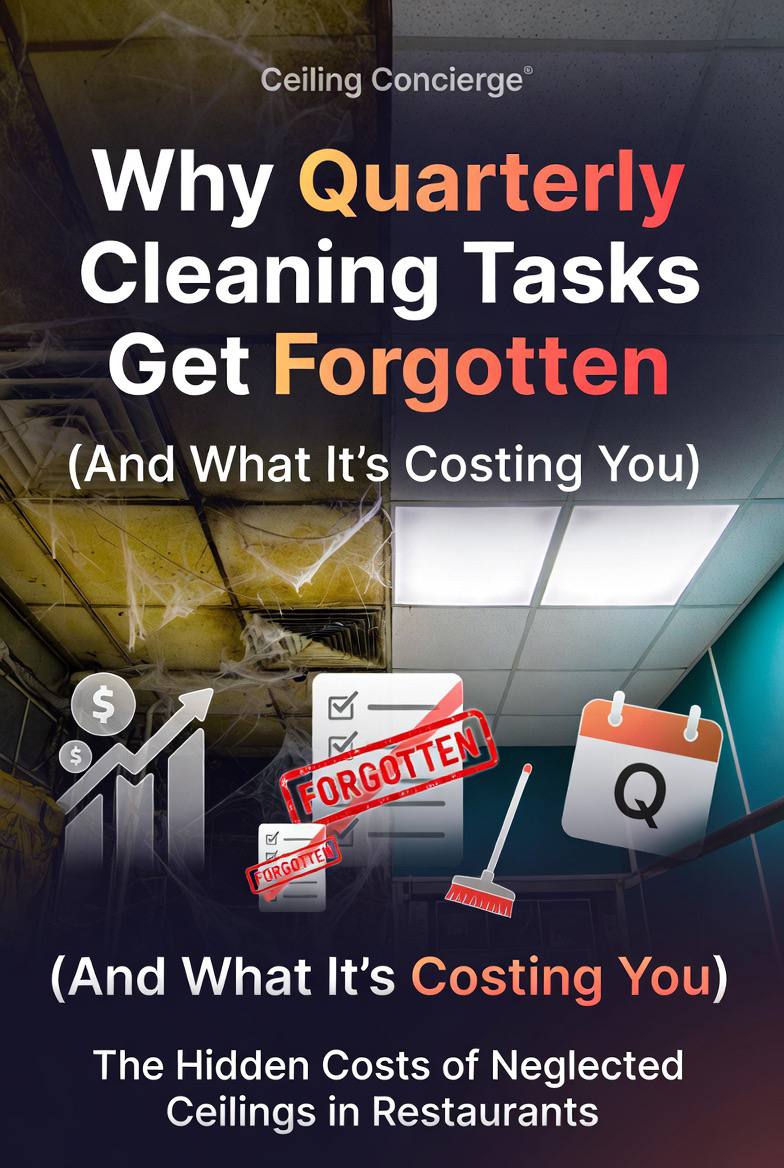
Your staff mops the floors every night. Wipes down the counters multiple times a day. Cleans the bathrooms on a strict schedule. These tasks happen like clockwork because they're built into daily routines.
But when's the last time someone cleaned the ceiling vents? Removed the cobwebs from the corners above the shelving? Wiped down the light fixtures?
If you have to think about it, that's the problem.
The Memory Gap: Daily vs. Quarterly
Human memory works on repetition. Tasks we do every day become automatic. We don't have to remember to mop because it's just what we do at closing. The routine carries the memory.
But quarterly tasks? They happen four times a year. That's three months between each occurrence. And in those three months:
- Staff turns over
- Managers get reassigned
- The person who "always handled that" leaves
- Daily fires consume all the attention
- The task simply... slips
This isn't a failure of your team. It's how brains work. We're wired to remember what we repeat. Quarterly tasks don't get repeated enough to stick.
What Gets Forgotten
The tasks that slip through the cracks are almost always the same:
- High dusting — ceiling structures, exposed pipes, top-of-shelf areas
- Ceiling tile cleaning — especially in kitchens and high-humidity areas
- Vent and diffuser cleaning — out of sight, out of mind
- Light fixture cleaning — nobody looks up until it's obvious
- Cobweb removal — corners, rafters, behind equipment
- HVAC intake cleaning — the filters get changed, but the grilles don't
Notice the pattern? These are all "overhead" tasks. They're above eye level. They don't interfere with daily operations. And because nobody's looking up, nobody notices the gradual accumulation until it becomes impossible to ignore.
The Slow-Motion Cost
Here's what makes forgotten quarterly tasks so expensive: the damage is incremental. Nothing breaks overnight. Instead:
Month 1: A thin layer of dust on the vents. Barely visible.
Month 3: Dust buildup starts restricting airflow. HVAC works slightly harder.
Month 6: Visible dust accumulation. Ceiling tiles starting to discolor.
Month 9: Customers notice "something off." Energy bills creeping up.
Month 12: Health inspector flags the vents. Tiles need replacement. HVAC maintenance call.
At no point did anyone make a conscious decision to let things go. The task just... wasn't on anyone's radar. And now you're paying for emergency remediation instead of routine maintenance.
Why Checklists Aren't Enough
The obvious solution is "put it on a checklist." And yes, that helps. But checklists have their own problems:
- Checklist fatigue: When everything is on the list, nothing stands out
- Box-checking syndrome: Items get marked complete without actually being done
- Turnover breaks the chain: New managers inherit lists they don't understand
- Quarterly items get lost: Daily tasks dominate attention
More importantly, even when the quarterly cleaning is on the checklist, who's doing it? Your staff has daily responsibilities. Asking them to also climb ladders and clean 20-foot ceilings every three months is asking for either poor results or resentment. Usually both.
The Outsourcing Solution
Here's what actually works: take quarterly tasks off your staff's plate entirely.
When you outsource ceiling maintenance to a dedicated service:
- It's on someone else's calendar. They remember because it's their job.
- Staff turnover doesn't matter. The vendor relationship persists.
- Equipment is handled. No storing scissor lifts or extension poles.
- It actually gets done. You're paying for results, not intentions.
- Documentation exists. Before/after photos, service reports, inspection-ready records.
The cost of a quarterly professional cleaning is almost always less than the accumulated costs of forgetting: emergency services, failed inspections, HVAC inefficiency, and premature replacements.
Building the Business Case
If you're trying to get approval for outsourced ceiling maintenance, here's the framework:
- Document current condition. Photos of dusty vents, discolored tiles, cobwebs. Make the invisible visible.
- Pull maintenance records. When was the last professional ceiling cleaning? If nobody knows, that's your answer.
- Calculate emergency costs. What have you spent on tile replacement, HVAC calls, or inspection remediation in the past year?
- Get a quarterly quote. Compare annual maintenance cost to annual emergency cost.
- Present the math. It almost always favors scheduled maintenance.
The Overnight Advantage
One reason quarterly cleaning gets skipped: it's disruptive. Nobody wants to close the store or work around a crew during business hours.
The solution is overnight service. Crew arrives after close, works while you're empty, and is gone before you open. Your staff arrives to clean ceilings without having lifted a finger. Customers never see a ladder or a cleaning cart.
This is how the best operators handle it: they don't try to remember quarterly tasks or burden their staff with them. They put it on autopilot with a vendor who shows up, does the work, and sends a report.
Ready to Get Started?
Let us handle your ceiling maintenance with a standardized quarterly program.
📱 Text Bill: (714) 317-2618
Or visit ceilingconcierge.com/opportunity